
-
Men's Sheepskin B3 Bomber Jacket with Detachable Hood
Regular price $279.00 USDRegular priceUnit price per -
Men's Sheepskin Bomber Jacket with Convertible Collar
Regular price $349.00 USDRegular priceUnit price per -
Women's Brown B3 Bomber Jacket with Faux Shearling
Regular price $239.00 USDRegular priceUnit price per -
Men's Genuine Shearling B3 Bomber Jacket
Regular price $349.00 USDRegular priceUnit price per -
Men's B3 Leather Bomber Jacket with Buckled Collar
Regular price $259.00 USDRegular priceUnit price per -
Men's Brown Sheepskin Bomber with Faux Fur Lining
Regular price $229.00 USDRegular priceUnit price per$0.00 USDSale price $229.00 USD -
Men's Dark Brown Leather Bomber with Faux Fur Collar
Regular price $229.00 USDRegular priceUnit price per -
Men's Tan Leather Bomber Jacket with Faux Shearling Lining
Regular price $249.00 USDRegular priceUnit price per -
Men's Distressed Brown Leather Coat with Sherpa Collar
Regular price $199.00 USDRegular priceUnit price per -
Men's Black Aviator Leather Jacket with Hood
Regular price $219.00 USDRegular priceUnit price per -
Men's Black B3 Bomber Jacket with Faux Shearling Lining
Regular price $359.00 USDRegular priceUnit price per$439.00 USDSale price $359.00 USDSale -
Men's Distressed Brown B3 Bomber Jacket
Regular price $239.00 USDRegular priceUnit price per$259.00 USDSale price $239.00 USDSale


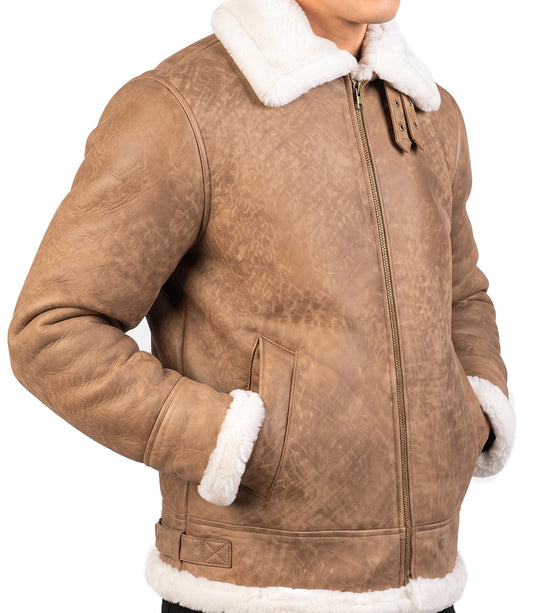


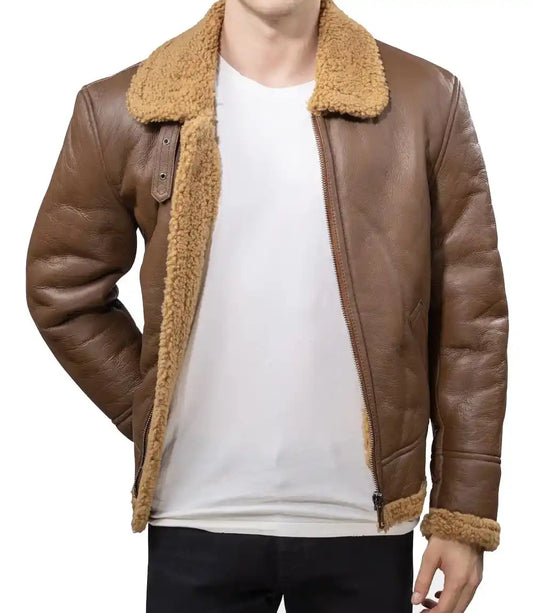


What Is a B3 Bomber Jacket?
A B3 bomber jacket is a waist length flight jacket made from sheepskin with the wool left on the inside. The US Army Air Corps adopted it in 1934 for bomber crews flying at high altitude. Thick shearling, a wide collar with leather straps and a snug waist are the features that define it.
You will also see it called a B3 flight jacket, a B3 shearling jacket or a sheepskin bomber. Shearling is sheepskin tanned with its fleece still attached, so the leather shell and the warm lining are one material. That is why a true B3 needs no separate padding to keep you warm.
Built for 40 Below: Where the B3 Came From
In the early 1930s, American bombers began flying higher than ever, and their crews worked in unheated, unpressurized cabins. Between 25,000 and 30,000 feet the outside air sits around 40 degrees below zero, the one temperature that reads the same in Fahrenheit and Celsius. The Army Air Corps answered with the Type B3, adopted in 1934 and inspired by the British sheepskin flying jacket designed by Leslie Irvin.
Crews in B17 and B24 bombers wore the B3 over Europe through World War II. Even General George S. Patton, a ground commander, was photographed wearing one during the war. Electrically heated flight suits later took over, surplus B3 jackets reached civilian stores, and the style has stayed in winter wardrobes ever since.
What to Look For in a B3 Jacket
- Real shearling. Part the wool at a cuff. It should grow straight out of the hide, with no fabric backing underneath.
- Wool depth. Deeper wool is warmer and bulkier. Faithful reproductions use close to 20 millimeters of wool in the body and thinner wool in the sleeves so your arms can move.
- The collar. A wide shearling collar with two leather straps that buckle across your throat. Turn it up and strap it shut, and it works like a built in scarf.
- The waist. The original was cut short so gunners could move inside cramped turrets. A classic B3 ends near your belt line and cinches with side straps.
- The zipper. Look for a heavy metal zipper you can work with gloves on.
- The pockets. The 1934 original had no hand warmer pockets. Many modern versions add them, and it is an upgrade worth having.
- A hood option. Hooded B3 jackets add a zip off shearling hood for snow and wind.
Curious what separates well made leather outerwear from the rest? Read our notes on refined craftsmanship in leather outerwear.
B3 vs Other Classic Flight Jackets
| Jacket | Origin | Built from | Warmth | Best for |
|---|---|---|---|---|
| B3 | US Army Air Corps, 1934 | Heavy sheepskin shearling | Very high | Deep winter, snow, long waits outdoors |
| RAF Irvin | Royal Air Force, 1930s | Sheepskin shearling, often sewn in panels | Very high | A British vintage look |
| G1 | US Navy, 1940s | Goatskin with a fur collar | Moderate | Cool days and layering |
| A2 | US Army Air Corps, 1931 | Horsehide leather with a light lining | Light | Spring, fall and mild winters |
| N3B parka | US Air Force, 1950s | Insulated shell with a fur trimmed hood | Very high, with more length | Extreme cold and wind |
Want B3 warmth with more length and a hood? Browse our parka jackets with fur hoods.
How Should a B3 Jacket Fit?
A B3 should feel snug at the waist, roomy enough across the chest for a sweater, and end near your belt line. The sleeves should reach your wrist bone with your arms relaxed.
Shearling takes up room on the inside. A wool pile about 2 centimeters deep trims roughly 5 inches off the inside chest compared with the outside measurement. That is why a B3 can feel a size smaller than a leather jacket with the same tag.
Compare the chest measurement in our size chart with your own chest plus room for the layer you will wear underneath. If you sit between sizes or plan to wear a thick sweater, size up. The shearling settles and molds to your shape over the first few weeks of wear.
How to Care for a Shearling Jacket
Brush it, air it, store it well, and leave deep cleaning to a specialist.
- Snow and light rain: shake it off and let the jacket dry at room temperature. Never use a heater or hair dryer, which can shrink and stiffen the hide.
- The wool: brush the collar and cuffs with a wide tooth comb or a shearling brush to keep them full.
- The leather: condition the outside once or twice a season with a product made for its finish. Test it on a hidden spot first.
- Storage: hang it on a broad wooden hanger in a breathable garment bag. Plastic traps moisture.
- Deep cleaning: never machine wash a B3 or send it to a regular dry cleaner. Use a cleaner that handles shearling.
Is a B3 Right for Your Winter?
A B3 is a cold weather jacket first. As a rule of thumb, it feels best from about 35°F down into the single digits, and a hat and gloves carry it further. In Chicago, Minneapolis, Denver, Boston or New York, it earns its place from December through February.
In Atlanta or Dallas, a B3 may only come out on the coldest days. There, a lighter leather bomber from our men's collection may get more wear. For styling ideas, read our guide to modern leather bomber jackets.
Why Buy Your B3 From Pelle Store
- Free shipping: orders are packed within 3 to 5 business days and usually reach US addresses 3 to 5 business days later. Details are in our shipping policy.
- 30 day returns: if the fit is wrong, send it back under our return and refund policy.
- Clear listings: every B3 lists its hide, lining, length and measurements on the product page.
- Fit help: contact our team with your height, weight and chest size, and we will recommend a size.
- Secure checkout: pay with Shop Pay, Apple Pay, Google Pay or any major card.